How to Identify Mugwort for Tea
How to Identify Mugwort for Tea
If you are considering collecting mugwort yourself, identification is the most important step before thinking about making tea.
The common name “mugwort” can refer to different Artemisia plants, so identifying the plant solely from a name is not enough.
Common mugwort is Artemisia vulgaris, an accepted species according to Kew.
Look at the Leaves
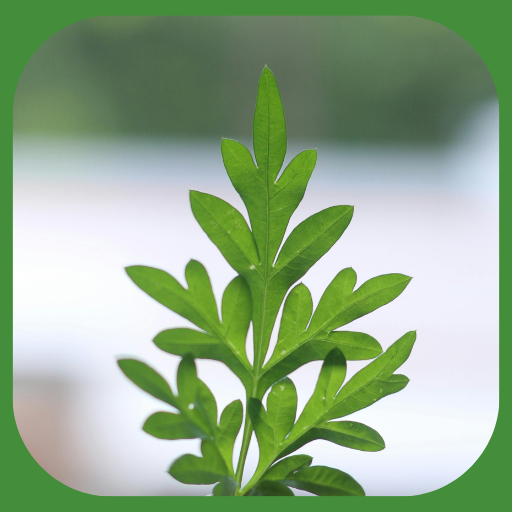
Common mugwort has distinctive leaves, although their appearance can vary depending on where they grow and their position on the plant.
The upper surface is generally green, while the underside can appear considerably paler or silvery.
This contrast can be a useful identification feature.
Check the Growth Habit
Common mugwort is a perennial herb and can grow into a substantial plant.
It commonly produces upright stems with numerous leaves.
Smell the Plant
Mugwort has a characteristic aromatic smell.
Gently crushing a leaf can release its scent.
However, smell should be treated as one identification feature rather than proof of identity.
Look at Several Features
Don’t identify a wild plant from one characteristic alone.
Consider:
- Leaf shape
- Leaf colour
- Leaf underside
- Stem
- Overall growth habit
- Flowers
- Aroma
- Location and habitat
Don’t Confuse Mugwort With Other Artemisia
The genus Artemisia contains numerous species.
Kew’s database recognises Artemisia as a large genus with species distributed across many parts of the world.
Some are also known by common names that include “mugwort” or “wormwood”.
Use Our Complete Identification Guide
For a more detailed visual and botanical guide, see:
That article can serve as the broader identification resource, while this article specifically targets people interested in identifying mugwort in the context of tea.
Don’t Guess Before Drinking
This is perhaps the most important point.
If you cannot confidently identify a wild plant, don’t consume it simply because it looks like mugwort.
NCCIH also notes that there is insufficient evidence to establish the safety of orally consumed mugwort.
Correct identification is therefore only the first step, not a guarantee that consuming the plant is safe.